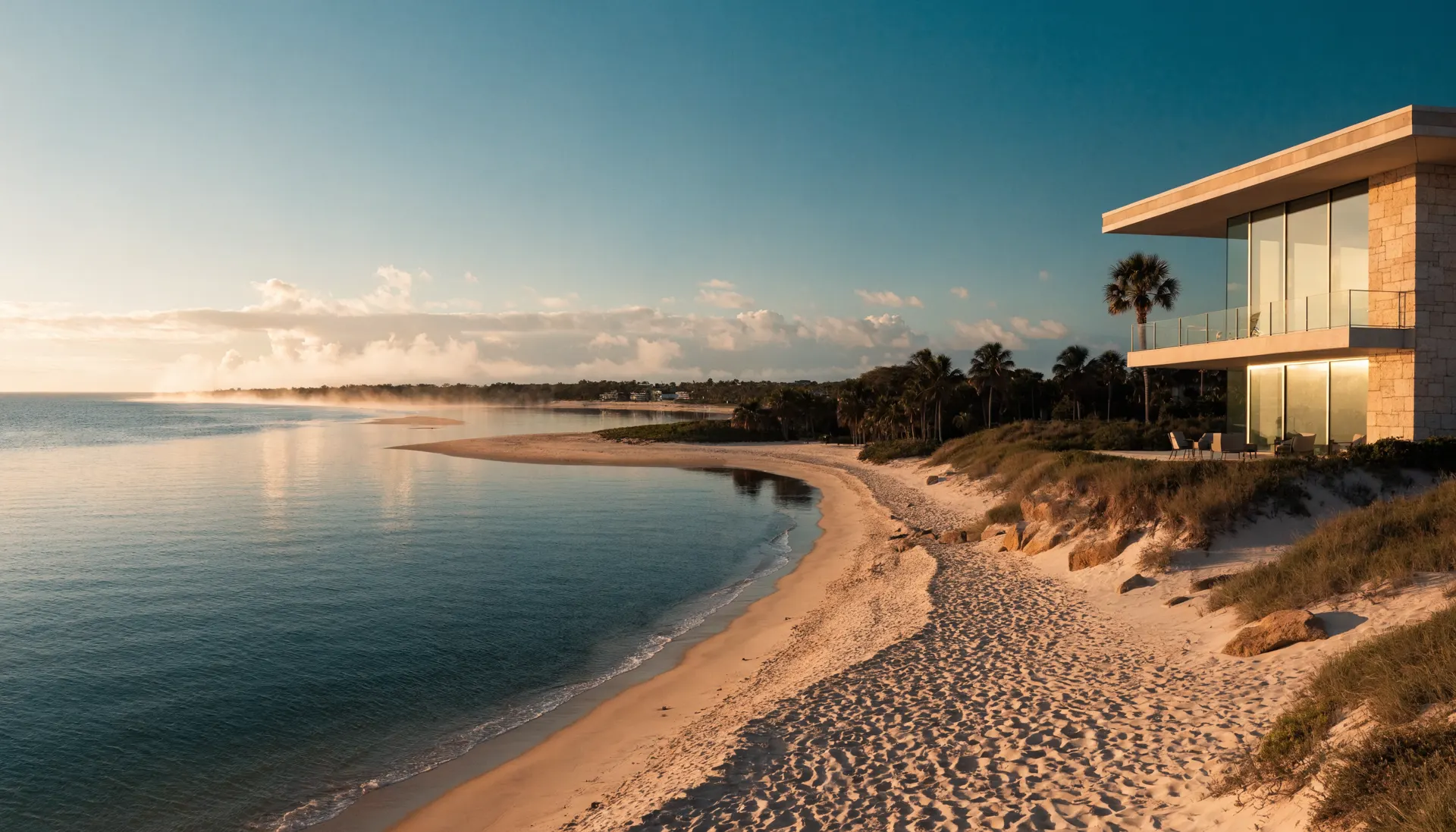
Daytona Florida Homes is a local real-estate guide to the Volusia and Flagler County coast, covering Daytona Beach, Ormond Beach, Port Orange, New Smyrna Beach, Holly Hill, beachfront condos, waterfront homes, and 55-plus communities, with plain guidance for buyers and sellers who want to understand this market before they make a move.
We chose to be a guide, not a listings feed. The Daytona coast is decided street by street and tide by tide; understanding it well is worth more than scrolling a thousand thumbnails.
9Coastal communities covered
3Property-type guides, condo to waterfront to 55-plus
100%Information-first, no live listings or pressure
A coast of distinct scenes
From the boardwalk to the river bend
Hover to linger on each. The same shoreline holds beach towers, riverfront homes, quiet inlets, and small-town main streets.
Daytona Florida Homes is a local real-estate guide to the Volusia and Flagler County coast, covering Daytona Beach, Ormond Beach, Port Orange, New Smyrna Beach, Holly Hill, beachfront condos, waterfront homes, and 55-plus communities, with plain guidance for buyers and sellers who want to understand this market before they make a move.
Communities
Explore the coast, town by town
Each community here has its own character, from busy beachside Daytona to quiet, established Ormond and small-town New Smyrna. Start where you feel at home.
Daytona Beach splits into two worlds: the barrier island beachside, where condos and beach cottages sit between the Atlantic and the Halifax River, and the mainland, where established single-family neighborhoods offer more space for the money.
Port Orange is a mostly mainland suburb just south of Daytona Beach, popular with families and year-round residents for its newer subdivisions, planned communities, well-regarded schools, and strong value compared with beachside prices.
Age-restricted, or 55-plus, communities limit residency by age under federal housing rules and are built around active-adult living: low-maintenance homes, clubhouses, pools, and organized activities.
Why Daytona Florida Homes
Local guidance first, sales pressure never
Most real-estate sites drop you into an endless listings feed and a contact form. We do the opposite. This is a local guide built to help you understand the Volusia and Flagler coast before you make a move: the barrier-island-versus-mainland divide that shapes prices, the real character of each community, what coastal condos and waterfront homes actually involve, and how buying and selling work here.
We deliberately do not publish live listings or prices, because that data changes constantly and is best delivered by a licensed local professional with current access. When you want real options or a valuation, we connect you with one. Explore the buyer's guide, the seller's guide, the area and neighborhood guide, and schools and lifestyle to get oriented.
A fuller guide to the Daytona, Volusia, and Flagler coast
If you are getting oriented to this market, the sections below go deeper on the area, the communities, the kinds of homes, and how buying, selling, and the real cost of ownership work here. Open whichever is useful.
A quick orientation to the Daytona, Volusia, and Flagler coast
The area this guide covers runs along the Atlantic in Volusia County and reaches north into the Flagler County coast. The defining feature is geographic: a barrier island carries the beaches and most of the oceanfront, while the mainland sits across the Halifax River, the local stretch of the Intracoastal Waterway. That river divides nearly every community here into a beachside and a mainland, and which side you choose shapes price, lifestyle, and the kind of home you will find more than any other single decision.
Daytona Beach is the largest city and the regional anchor, spanning both the island and the mainland, with Interstate 95 and Interstate 4 meeting just to the west. Around it sit distinct communities: established, quieter Ormond Beach to the north, family-oriented Port Orange to the south, small and central Holly Hill along the river between Daytona and Ormond, and the small-town arts-and-surf coast of New Smyrna Beach at the south end of the county. Each has its own character, and the right fit depends on how you actually want to live, not on price alone.
Daytona Beach suits beach lovers who want walkable ocean access, seasonal residents who want a lock-and-leave condo, and value-minded buyers who are happy on the mainland where the dollar stretches further. Daytona Beach Shores and Ponce Inlet, on the island to the south, are quieter and more condo-heavy than the busy boardwalk core. Ormond Beach, just north, reads as greener and more established, with mature tree canopy, riverfront and golf neighborhoods, and the low-rise beachside strip of Ormond-by-the-Sea; it tends to suit downsizers, families, and anyone wanting calm near the water.
Port Orange is primarily a mainland suburb popular with families and year-round residents for newer subdivisions, planned communities, and strong value, with the beach a short drive east over the Dunlawton bridge. Holly Hill is a small, central, often-affordable mainland city with Halifax River frontage along the Riverside Drive corridor, drawing first-time buyers and value seekers. New Smyrna Beach, at the south end, offers genuine small-town coastal charm, walkable Flagler Avenue and Canal Street districts, and a strong surf and arts identity, which keeps it competitive relative to its size.
Property types here: condos, waterfront, and 55-plus living
Coastal living on this stretch comes in a few distinct forms, and each involves different homework. Beachfront and oceanfront condos dominate the island, from older mid-century buildings to taller towers. With a condo, the building matters as much as the unit: Florida now requires milestone structural inspections and reserve funding for many older or taller coastal buildings, so the association's finances, reserves, dues, and any special-assessment risk are central to your true cost. A great unit in a troubled building is a poor buy, which is why reading the budget, reserve study, and recent meeting minutes is essential.
Waterfront homes are the premium tier and split into oceanfront on the Atlantic, riverfront on the Halifax, and canal homes with Intracoastal access. Each differs in view, boating, exposure, and price, and all demand specific due diligence: seawall and dock condition, low-tide water depth, fixed-bridge clearance for boats, the flood zone, and real insurance costs. Age-restricted, or 55-plus, communities are the third specialty, built around low-maintenance, active-adult living with shared amenities funded by dues; the age and occupancy rules and the association's financial health are the things to verify before buying.
Buying here: a plain primer on how the process works
The mechanics of buying are the same as anywhere, with a coastal twist at each step. Start by getting financially ready: a real mortgage pre-approval if you are borrowing, or proof of funds if you are paying cash, and a budget that includes taxes, insurance, and any association dues. Next, decide beachside versus mainland and shortlist a few communities, because that frames everything else. Then tour with a local agent who knows the blocks and can flag what a listing photo hides, like a tired roof or a building facing a looming assessment.
From there it is offer, inspection, and close. The inspection window is where you protect yourself on this coast: examine the roof, windows, and systems, look for any sign of water intrusion, confirm the flood zone, and get firm insurance quotes while you can still renegotiate or walk. For a condo or a home in an association, review the budget, reserves, inspection status, and rules in this same period. Preparation, not speed alone, is what wins the right home here, and a knowledgeable local professional handles the pricing strategy and the contract itself.
Selling here: pricing, preparation, and your net proceeds
Selling well comes down to pricing to current local conditions, presenting the home at its best, and marketing it where buyers actually look. The right price is set by recent comparable activity in your specific neighborhood and property type, not by hope or by what a neighbor got two years ago, and markets move differently for a beachside condo, a mainland family home, and a waterfront property. Overpricing is the most common and most costly mistake, because a home that sits draws fewer showings and often sells for less than sharp initial pricing would have produced.
On this coast, buyer confidence is tied to specific things, so address them before you list: a clean, well-maintained roof, functional windows and any storm protection, no signs of moisture, and well-kept exteriors that take a beating in salt air. Nearly every buyer starts online, so strong photography and broad exposure matter, and this market draws second-home and out-of-area buyers worth reaching. Finally, think in net proceeds rather than sale price alone, since closing costs, any commission, mortgage payoff, prorated taxes, and concessions all affect what you actually walk away with.
Cost of ownership: insurance, flood, taxes, and HOA dues
The sticker price is only the start of the math on this coast, and carrying costs are where budgets get surprised. Insurance is the big one. A coastal Florida home generally needs windstorm coverage, and many homes, especially anything near the river, the ocean, or a low-lying lot, also need flood insurance. Both vary enormously with the home's elevation, age, roof, and proximity to water, so two similar houses can carry very different premiums. The reliable move is to get a real quote on the specific address before you fall in love with a home, not after you are under contract.
Then there are association costs and the realities of an older housing stock. Condos and many planned communities charge monthly dues that fund insurance, maintenance, amenities, and reserves, and an underfunded association can mean a future special assessment, so the financial documents matter. Roof age drives both insurance eligibility and your near-term repair budget, and windows, storm protection, and the age of major systems all feed the true cost. None of this is a reason to avoid the area; it is a reason to budget honestly, quote insurance early, and inspect thoroughly so the home that pencils out on paper still pencils out after the quotes come in.
How this guide works, and what we deliberately do not publish
Daytona Florida Homes is a local real-estate information guide, not a live listings portal. We deliberately do not publish prices, inventory counts, valuations, or Multiple Listing Service data on this site, because that information changes constantly and is best delivered by a licensed local professional with current access. What we offer instead is durable, locally-accurate guidance: how the communities differ, what coastal condos and waterfront homes really involve, and how buying and selling work on this coast.
When you want real options or a market opinion, we connect you with a licensed local real-estate professional through our contact page or any buyer or seller form on the site. There is no obligation, and we do not sell your information. This content is general information rather than personalized advice, and it is not a solicitation or an offer of representation. Real-estate details, market conditions, rules, insurance, and flood designations vary and change, so verify anything decision-critical with current local sources. We support equal-housing opportunity: all housing is offered without regard to race, color, religion, sex, disability, familial status, or national origin.
Because we do not list live inventory here, this is how you get current, accurate options. Tell us what you are buying or selling and a licensed local professional follows up. No obligation.
Buying on the coast
Selling your home
Start here
Questions about the Daytona-area market
What areas does Daytona Florida Homes cover?
We cover the Volusia and Flagler County coast of Florida: Daytona Beach, Ormond Beach, Port Orange, New Smyrna Beach, and Holly Hill, along with beachfront condos, waterfront homes on the Halifax River and Intracoastal, and 55-plus active-adult communities. Each area has its own guide explaining its character, housing, and lifestyle.
Should I buy on the barrier island or the mainland?
It depends on how you want to live. The barrier-island beachside offers condos and beach homes with walkable ocean access, usually at a higher price per square foot. The mainland offers more single-family homes and value a short drive from the sand. Most communities here include both sides, so visit each before deciding.
Does this site have live listings and prices?
No. Daytona Florida Homes is a local guide, not a live listings portal, so we do not publish prices, inventory, or Multiple Listing Service data here. That information changes constantly and is best delivered by a licensed professional. Request current listings through our contact page and a local agent will share up-to-date options.
How do I get a home valuation or current listings?
Use our contact page or any buyer or seller form on the site. Tell us what you are buying or selling, and a licensed local real-estate professional will follow up with current listings or a no-obligation market opinion grounded in current conditions in your specific area. There is no obligation, and we do not sell your information.
Which Daytona-area community is right for me?
It depends on what you want from daily life. Beach lovers and snowbirds gravitate to the barrier island in Daytona Beach, the Shores, and Ponce Inlet. Families looking for newer homes and value lean toward Port Orange. Buyers wanting a quieter, established feel choose Ormond Beach. Those after small-town charm pick New Smyrna Beach, and value-minded or first-time buyers often start in Holly Hill. Reading each community guide is the fastest way to narrow it down before you tour.
What does it really cost to own a home on this coast?
Beyond the purchase price, plan for property taxes, insurance, and any association dues. Coastal Florida homes generally need windstorm coverage, and homes near the ocean, the Halifax River, or low-lying ground may also need flood insurance, which varies widely with elevation, roof age, and construction. Condos and many planned communities add monthly dues. Always quote insurance on the specific address early, since carrying costs can decide whether a home is genuinely affordable.
Is the Daytona area a buyer's market or a seller's market?
Market conditions shift over time and differ by community and property type, so there is no single answer, and we do not publish market statistics here. A beachside condo, a mainland family home, and a waterfront property can each behave differently at the same moment. The reliable approach is to get a current read from a licensed local professional for your specific area and segment before you buy or sell.
Do you cover Flagler County as well as Volusia County?
Our primary focus is the Volusia County coast: Daytona Beach, Ormond Beach, Port Orange, New Smyrna Beach, Holly Hill, Daytona Beach Shores, and Ponce Inlet. We also serve the neighboring Flagler County coast just to the north, which shares much of the same barrier-island and Intracoastal geography. Tell us the specific area you are considering and we can connect you with a licensed local professional who knows it.
Daytona Florida Homes publishes local real-estate information for the Volusia and Flagler County area. It is intended for general information and is not a solicitation, an offer of representation, or a guarantee of any result. We do not publish live listings, prices, or Multiple Listing Service data on this site; for current availability and pricing, work with a licensed Florida real-estate professional and verify every detail independently. We support equal-housing opportunity: all housing is offered without regard to race, color, religion, sex, disability, familial status, or national origin.